

Winter Pepper Bed Prep: Soil, Irrigation, and High Tunnel Upgrades for a Hotter 2026 Season
- Jennifer & Gene Chumley | Harmony Springs Farm

- Dec 21, 2025
- 4 min read
Updated: Apr 4
🎄 Christmas on the Farm: Real Work, Real Challenges
While most folks are settling in for the holidays, we’re out in the field tackling the winter tasks that keep our farm thriving. This includes irrigation upgrades, fertigation testing, compost monitoring, and planning. The heavy soil work waits for March, but the engineering and prep work never really stop.
Christmas on the farm looks a little different: muddy boots, cold hands, and a to-do list that doesn’t care what day it is. But this is the work that sets the stage for everything we grow.
🌱 Prepping Pepper Beds the Week of Christmas
Preparing pepper beds in the Appalachian foothills isn’t a one-day job. It’s a season-long process of improving soil structure, dialing in irrigation, and ensuring every row is ready to support the heat and yield we expect from our superhots. Even though it’s the week of Christmas, the farm hasn’t slowed down. Winter is when we do the quiet, foundational work that determines how strong our pepper season will be. This year, that work includes irrigation upgrades, compost monitoring, soil science, and a few engineering challenges along the way.
🌄 Why Winter Soil Bed Prep Starts Months Before Planting for Pepper
Healthy peppers start with healthy soil. Research shows that soil moisture levels and nitrogen availability directly influence pepper leaf water potential, stomatal conductance, and overall yield. That’s why we pulled soil samples early and built our amendment plan around the data.
If you missed the full breakdown, you can read our blog Soil Test Secrets for Hotter, Healthier Peppers: Soil Test Secrets for Hotter, Healthier Peppers.
We’ll retest in March to verify improvements. This step is supported by studies showing that nutrient balance shifts significantly after winter moisture cycles.
🚜 Soil Prep Timeline: What We’re Doing Now vs. March
A quick clarification on our soil prep schedule: We’re not tilling, plowing, or subsoiling yet. All of that heavy soil work happens in March, right before planting, when:
The soil is warm enough to work.
The compost has finished breaking down.
The ground is dry enough to avoid smearing or compaction.
Right now, the compost piles are still cooking along nicely — breaking down, heating up, and transforming into the organic matter that will feed our pepper rows in spring.
So for this week of Christmas, our soil work is focused on:
Monitoring compost breakdown.
Planning row layout.
Reviewing soil test recommendations.
Preparing for March tilling, subsoiling, and plowing.
Mapping where compost trenches will go once the material is ready.
🌱 Why Subsoiling Matters for Peppers (Especially in a High Tunnel)
Subsoiling is one of the most important steps we’ll take in March. It’s especially critical for peppers grown in a high tunnel.
1. High tunnels create deeper compaction layers
Because high tunnels protect soil from rain, the ground doesn’t naturally “reset” each winter. Without freeze-thaw cycles and natural moisture infiltration, the soil can form a hardpan layer 8–14 inches deep.
Subsoiling fractures that layer so pepper roots can reach deeper moisture and nutrients.
2. Peppers hate wet feet — and subsoiling improves drainage
Breaking the hardpan allows water to move downward instead of pooling around the root zone. This reduces:
Root rot.
Fungal pressure.
Salt accumulation.
Uneven moisture pockets.
3. Deeper roots = hotter peppers
Peppers with deeper root systems handle drought stress better, produce more consistent fruit, and develop higher capsaicin levels under controlled stress.
4. It improves irrigation efficiency
Whether you’re using drip or overhead sprinklers, water distribution is only as good as the soil’s ability to absorb and move it. Subsoiling creates vertical channels that help:
Drip lines penetrate deeper.
Overhead water infiltrate evenly.
Fertigation nutrients move through the profile.
🌱 Compost Trenches (Coming in Spring)
We’re not trenching compost into the rows yet. That will happen once the compost is fully matured and the soil is workable in March. But the plan remains the same:

Compost goes in the row, not broadcast.
This improves moisture retention, microbial activity, and nutrient availability.
It aligns with research showing organic matter boosts pepper water-use efficiency.
For now, the compost is still breaking down beautifully, and we’re letting the microbes finish their winter magic.
🧪 Fertigation Test: A Necessary Failure
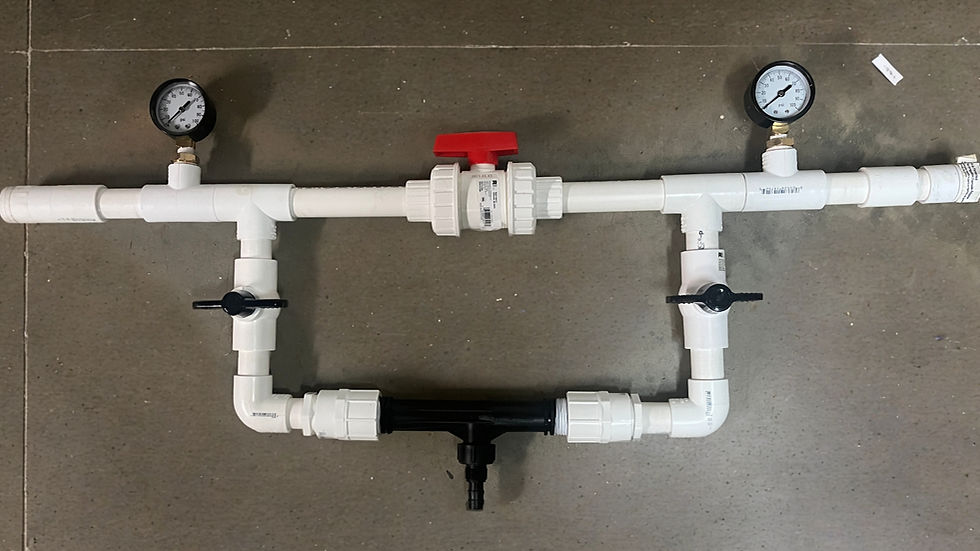
We ran our first test on the fertigation venturi setup today, and it was… a fail. Two leaks showed up immediately, and the venturi diameter turned out to be too large for the pressure and flow rates we’re targeting. That means I’ll be going back to the drawing board and leaning on my engineering background in fluid mechanics to calculate the correct venturi size and pressure differential.
Failures like this are part of the process — and honestly, they’re valuable. They tell us exactly what needs to be fixed before the season starts.
💧 Upgrading Irrigation: From Drip to Hybrid Drip/Sprinkler Strategy
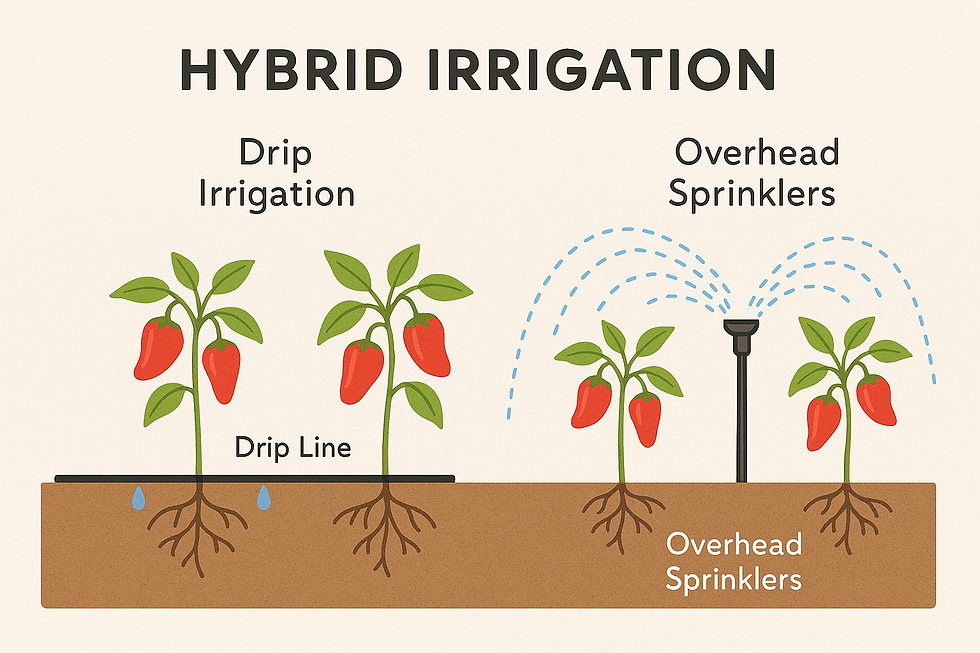
Drip irrigation is incredibly efficient. Multiple studies confirm that drip systems improve water-use efficiency and yield in peppers. But early-season overhead sprinklers help us achieve more uniform moisture during germination and soil settling.
Research comparing irrigation methods shows that water distribution uniformity is a major factor in pepper productivity.
For a deeper dive, see our blog Drip vs Sprinkler Irrigation for Peppers in the Appalachian Foothills: Drip vs Sprinkler Irrigation for Peppers in the Appalachian Foothills.
The overhead sprinklers are fully plumbed, but we won’t connect them to the water supply until we’re safely past freezing temperatures — usually early March here in the Appalachian foothills.

🔥 Why This All Matters for Pepper Heat and Yield
Every improvement we make — soil structure, organic matter, irrigation uniformity, nutrient delivery — is backed by agricultural research. This research shows that water stress, nitrogen balance, and soil salinity all influence pepper growth, fruit set, and yield. This is the quiet work that makes the hot work possible.
🌱 What’s Next?
Over the next few weeks, we’ll:
Finish compost breakdown.
Finalize irrigation layout.
Retest soil in March.
Prep the seedling greenhouse.
Start early varieties indoors.
And of course, we’ll keep sharing the process as we go. If you want to follow along with the full season, stick around — we’ve got a lot of farm-science goodness coming your way.
Want to grow hotter peppers? Follow our journey or grab seeds from our shop — spring’s coming fast.
Merry Christmas from Harmony Springs Farm,
Gene and Jennifer


Comments